BUQALLA POOLS AND HOTEL
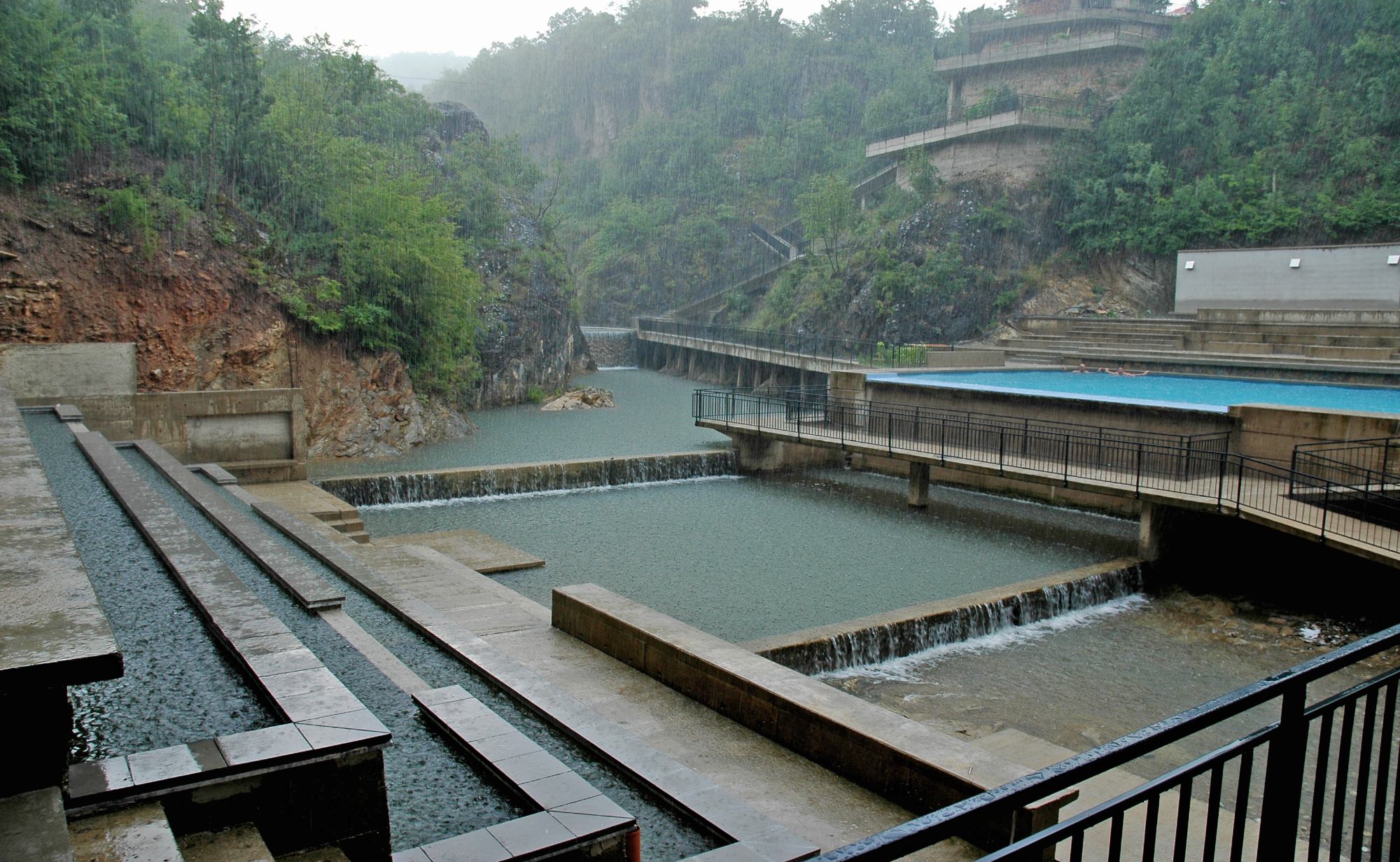
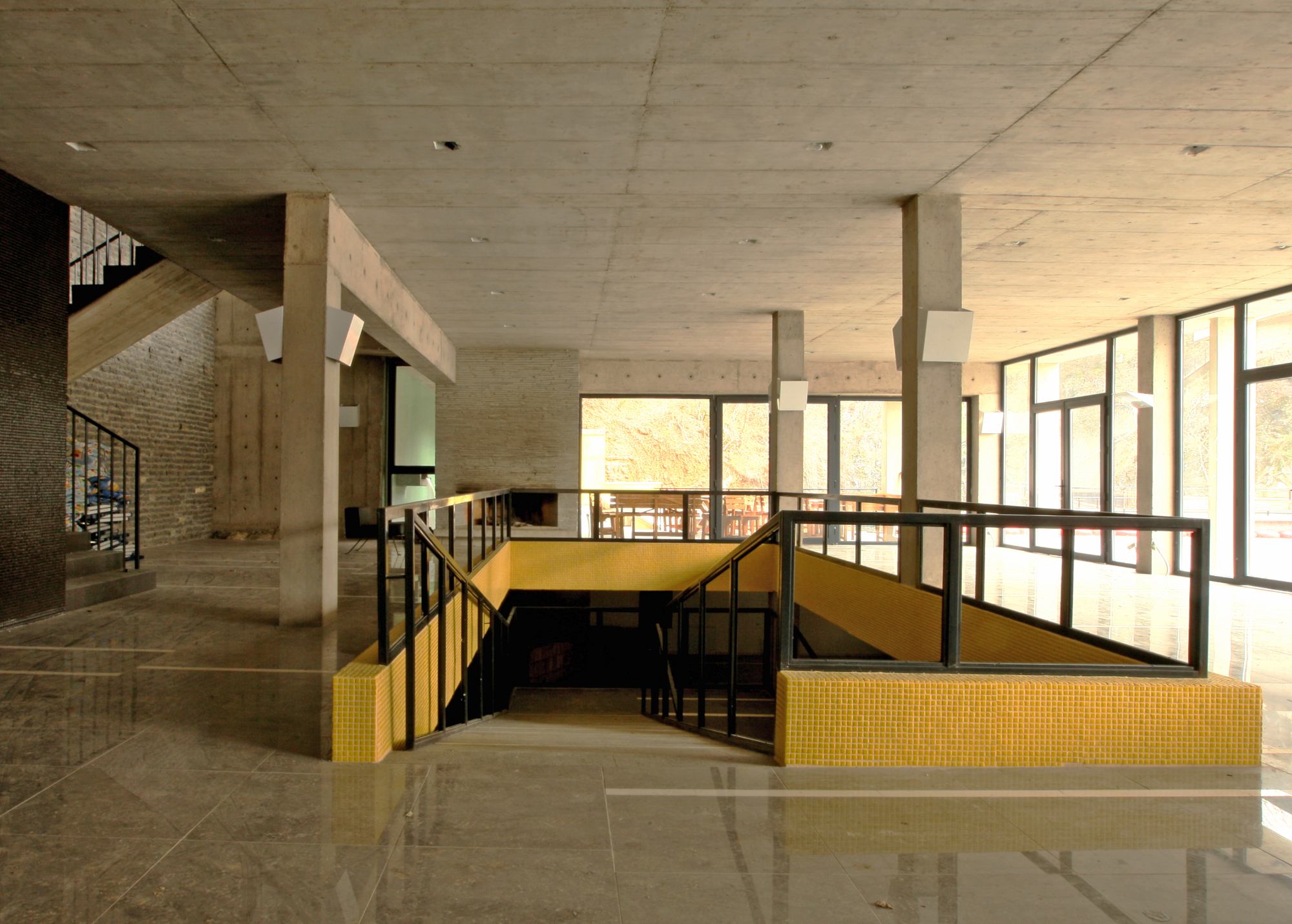
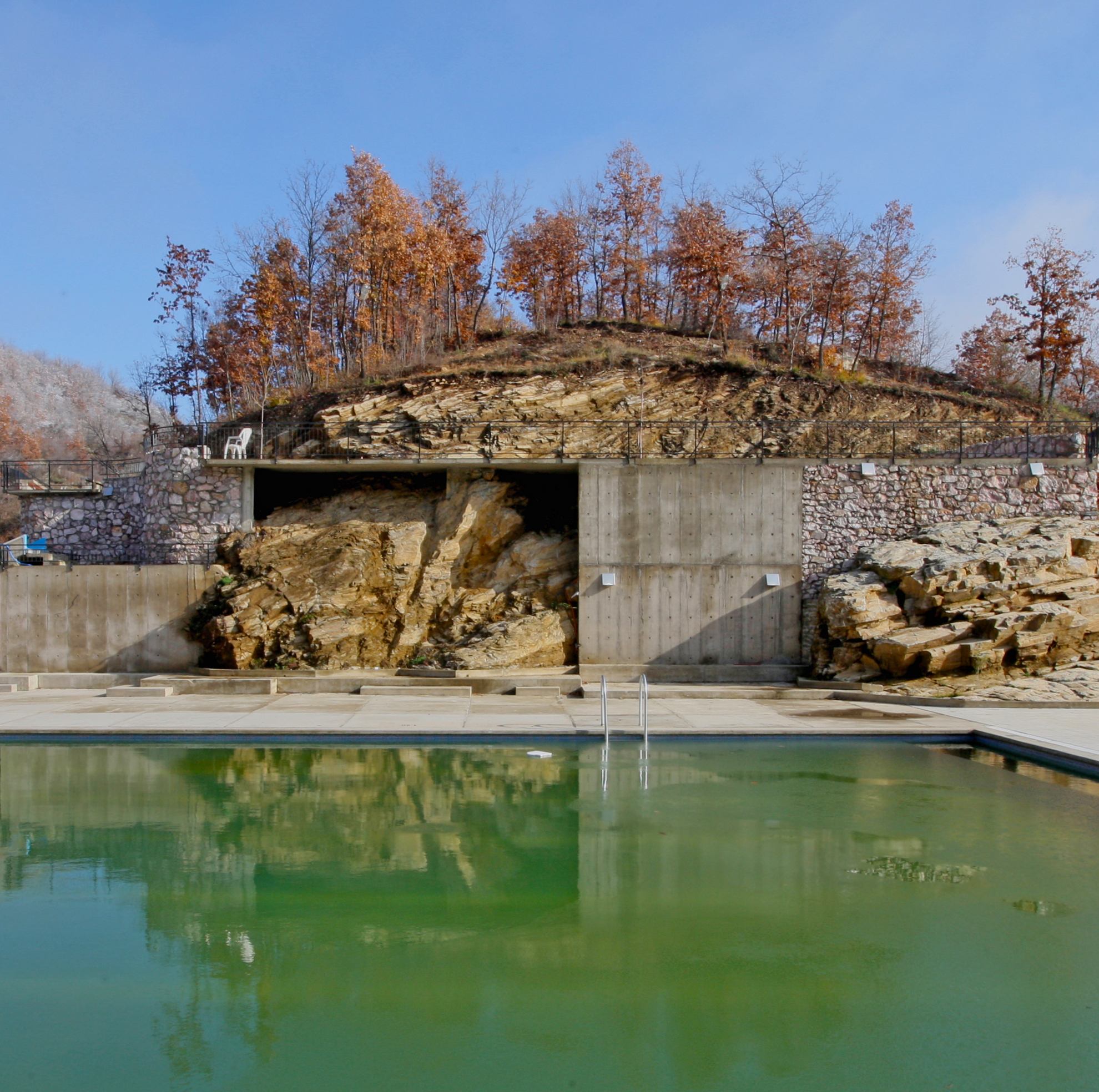
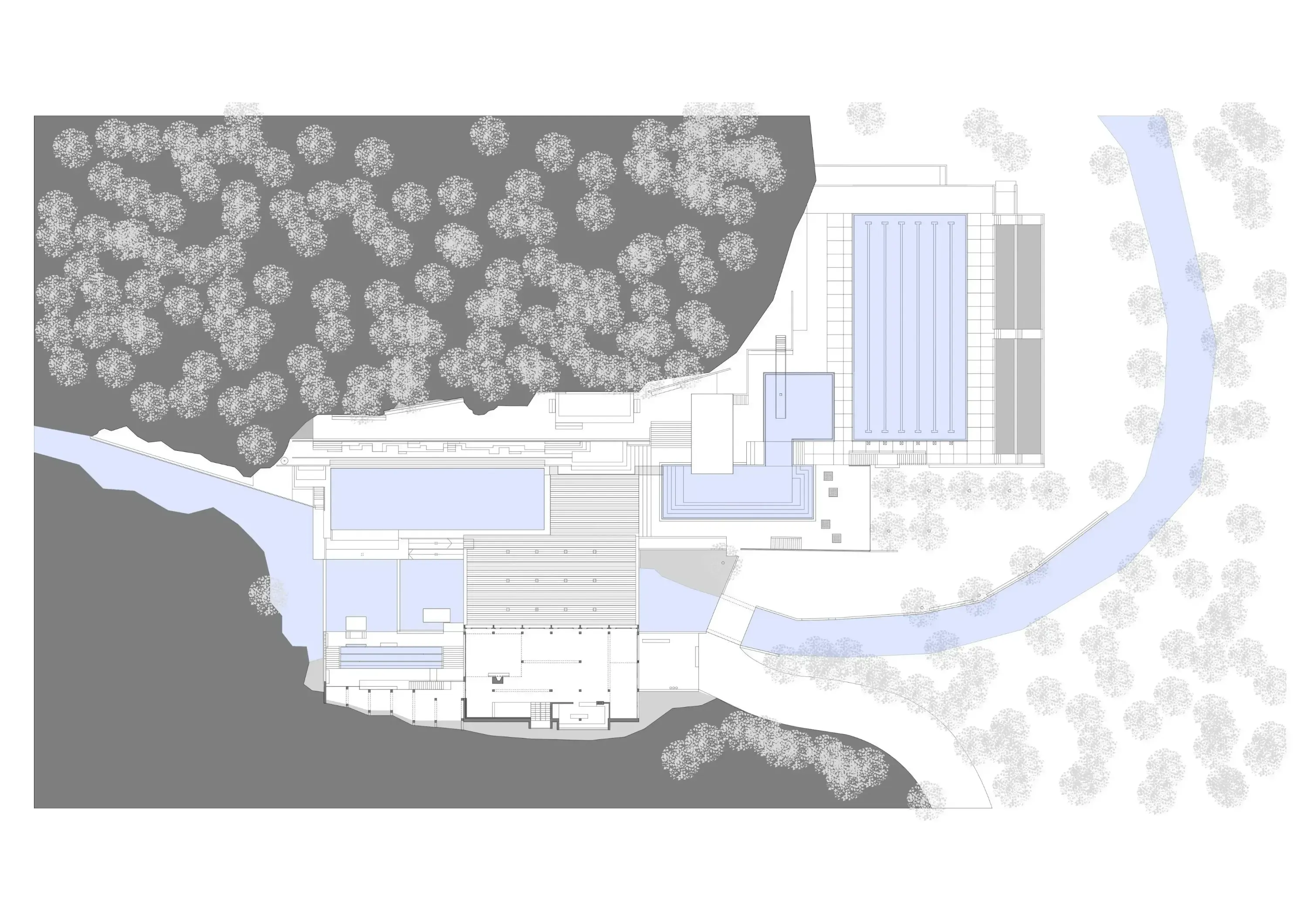
Buqallat is located northeast of Theranda, 3km from the Prizren-Pristina highway. The father of the current owners had brought the architect, for the first time, to the river valley, in a place called Buqalla, in 1991. In the following years the owners would build a large and a small children’s pool together with a restaurant for clients from Theranda. After the war the owners hired the architect to completely redesign the ensemble with pools and a small hotel. The first project would set the composition which would eventually remain. Connected by two bridges to the north of the river the hotel would be located while to the south the swimming pools and a series of terraces. Thus although narrow the space around the river would accept an ever-increasing program. The first pool built in the 90s would be repaired but would remain, three more pools would be built latter, one shallow for children, one deeper for toboggan and one Olympic pool. The hotel, a 5-level structure, would be built on the northern rocky shore. Construction would begin in 2003 with work around the river and swimming pools. The works would be performed by the owners and individually engaged workers. No outside professional firm would work in the building site. Since none of the workers knew how to read the plans, the architect also directed the works. Building is mostly concrete construction. Concrete was the cheapest and most practical material. Although the workers had no experience in shaping concrete the result was relatively good. Distancers for apparent concrete would be used for the first time in this building. Distancers are placed every 50cm in standard molds 50/100/150/200/250 / 300cm. The exterior walls are mostly made of concrete but some of the walls to the west of the complex are made of stone. The pools are covered with glass tiles produced by the owners. The hotel building is a reinforced concrete structure with 20cm thick slabs and 30 / 30cm or 30 / 50cm pillars. The supports are placed every 4m with exceptions at 8m, where additional beams are used. The volume of the hotel comes out from the rocky mountain in the north, with the increased the volume to the upper levels. In some hotel rooms the rocks are visible. The circulation in the hotel is double, apart from the interior, the first 4 levels also have external access. This allows the interior spaces and hotel rooms to have direct access from the outside, thus reinforcing the impact of nature on the overall experience. Each space has landscape-focused views but in many places an architectural game of elements that are facing each other has also been developed. Thus the empty space between the hotel and the terraces with pools is the main theme of this architecture. This space is constantly in tension and in voluminous poetic play. The theater and cinema scene to the south is a visual culmination from the entire central part of the ensemble. The terraces of the hotel overlook the scene, so the spatial experience from them makes you feel the unity of the outside and inside. Therefore the limits of the interior and exterior has been dissolved.
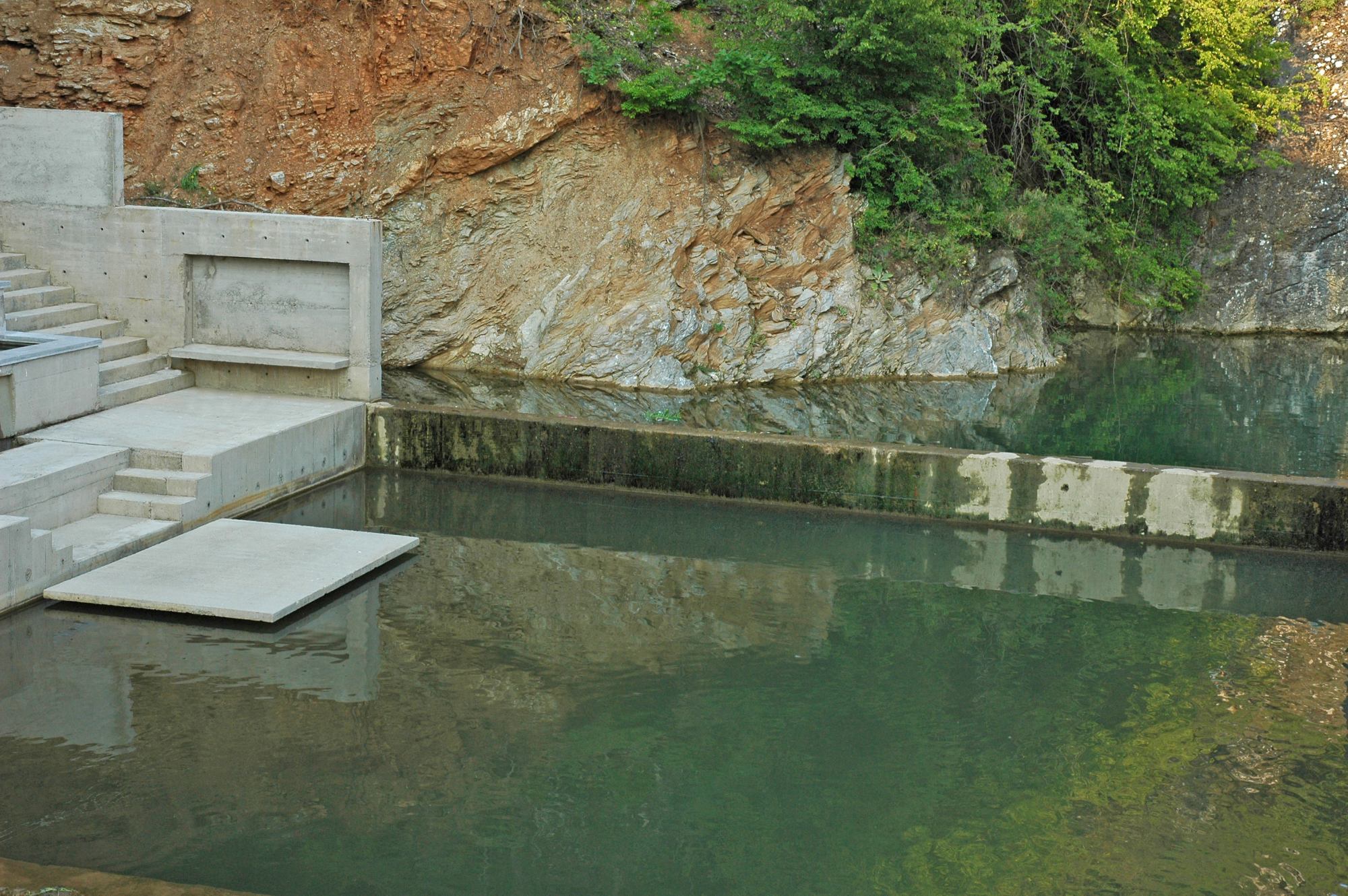
The subtle relation between nature and architecture has been achieved. In the middle of this composition flows the river, shaped and divided into sequences. The river is gradually transformed from the natural aspect into architecture, through variable situations, which play with the concept of light and darkness, between reflection and opacity, between depth and shallowness. A river stream is diverted through the hotel foundations to the north to “spring” from the building, feeding the fish-raising canals and back again into the river. Two “islands” have also been built in the river, one hovering just one centimeter above the water. Thus the work of man is compared to the work of nature, emphasizing one another. The project would achieve powerful expressions with simple shapes without embellishments. The ensemble would function as a coherent and poetic composition.
The Buqalla project is an outdoor architecture integration project. Initially the pools would be supplied by the river with a filtration system filling all the pools with free fall. Terraces would be organized in full and successful integration with the landscape. The extraordinary collaboration between the owners and the architect would end a few months before the opening of the complex. The owners would furnish the complex without the consent of the architect. They would make other changes, additions, build another swimming pool, add a floor to the hotel, etc. The actual presentation was made before these interventions.