FISHERMANS HOUSE
The existing family house, constructed in the 1960s, was demolished to allow for a new residential intervention compliant with current building regulations, evolving household requirements, and contemporary sustainability standards. The surrounding area has undergone progressive densification, with formerly single-family plots increasingly subdivided and occupied by multiple residential units.The new building is positioned on the northern edge of the plot, reusing the original foundations. This decision enables the preservation of a south-oriented garden and optimizes solar exposure for outdoor space. The project draws upon vernacular architectural principles, particularly the distinction between a restrained, modest exterior expression and a more generous and articulated interior spatial organization.
Architecture
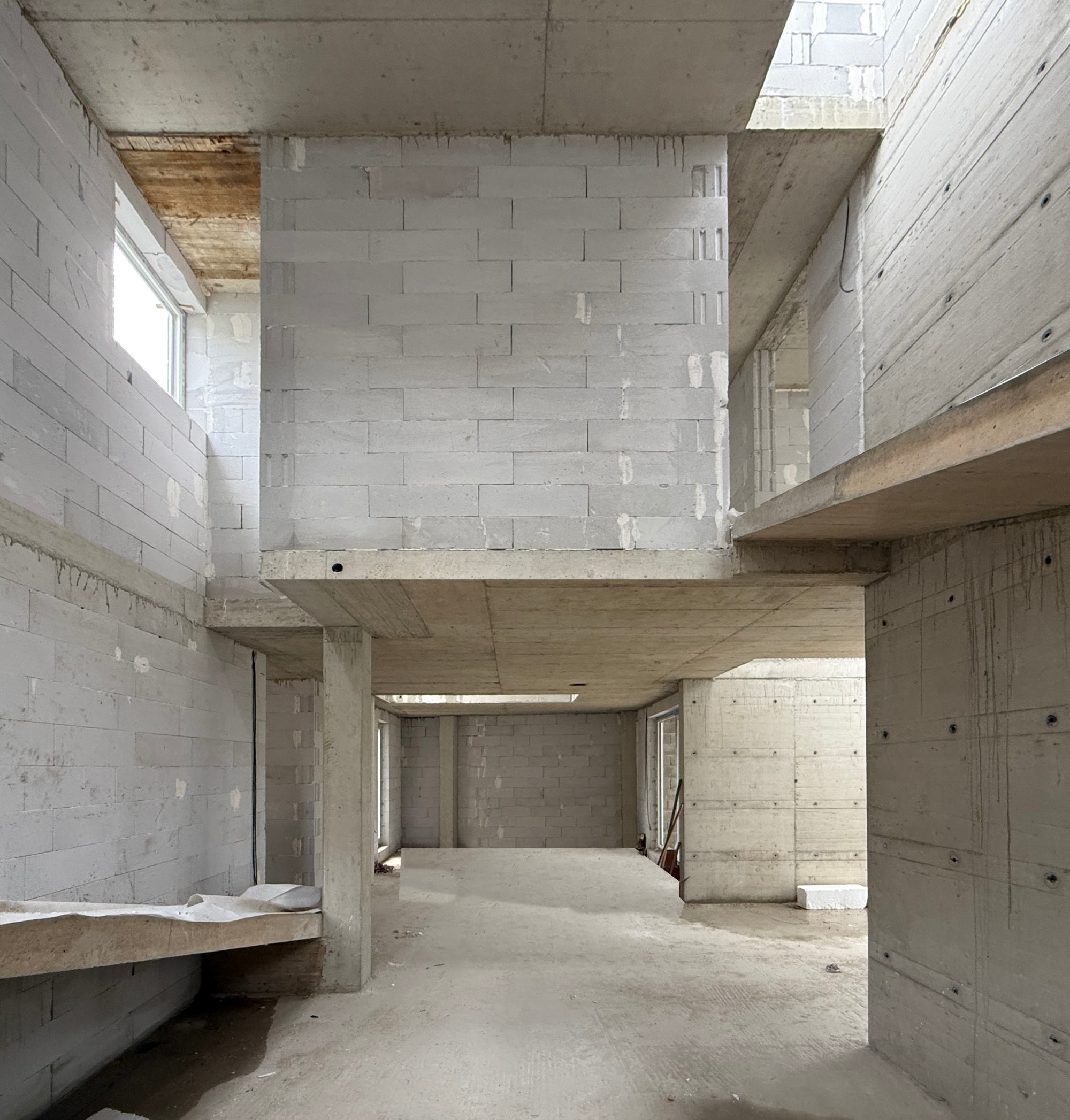
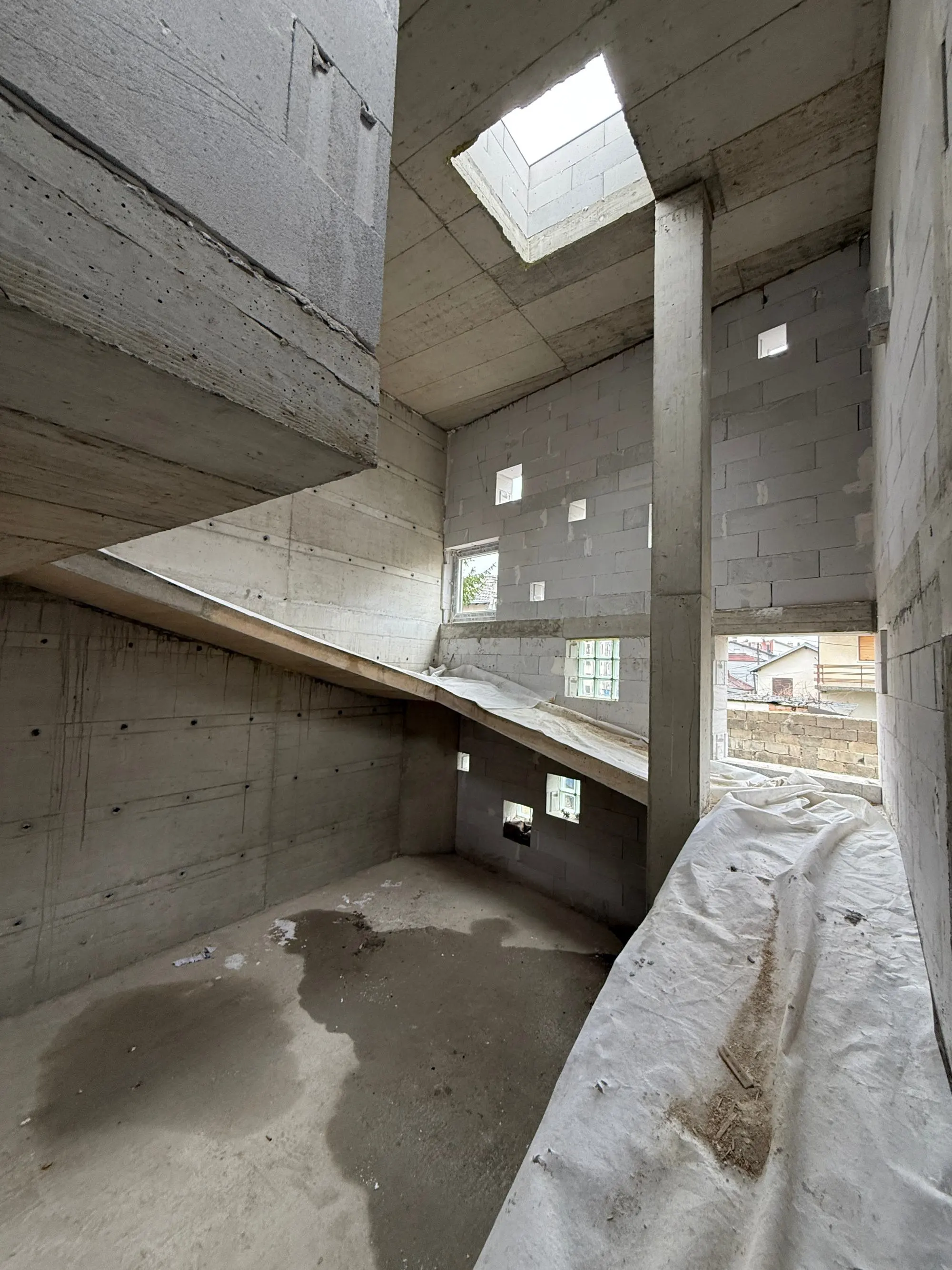
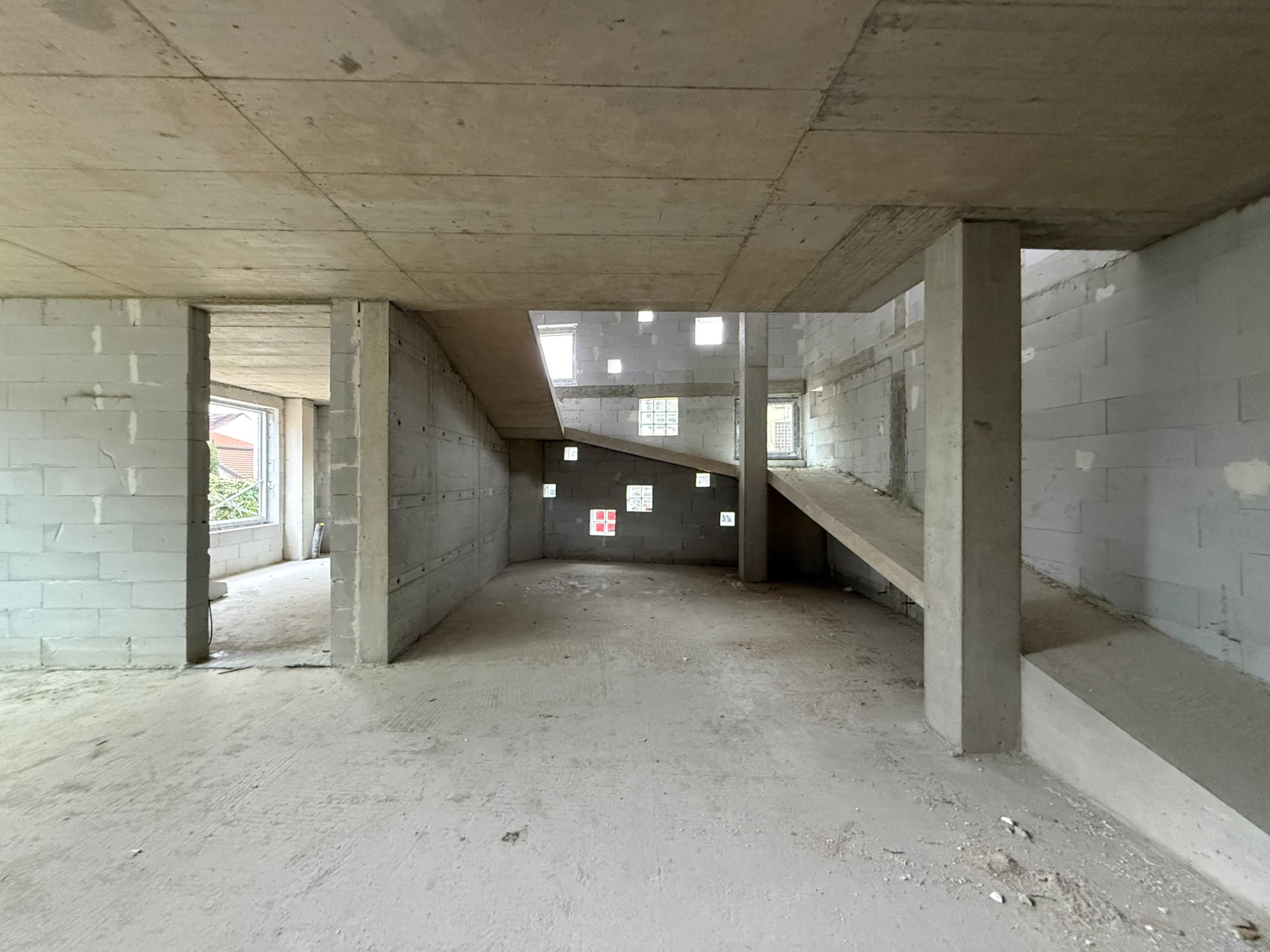
The house is conceived as a single, compact volume organized in two levels. While the external form remains deliberately simple and introverted, the interior is characterized by a complex spatial configuration. Four bedrooms are arranged so that double-height voids consistently separate them, allowing vertical continuity and spatial depth to be perceived throughout the interior.Circulation is conceived as an architectural sequence, articulated through a ramp located within the double-height living space. This element reinforces spatial continuity and emphasizes movement as a central design concept. A series of skylights integrated into the flat roof introduce controlled natural light into the interior, facilitating the legibility of the spatial organization and enhancing the perception of volume.The internal layout can be interpreted as a system of smaller, autonomous spatial units nested within a larger structural volume. These elements appear suspended within the space, an effect achieved through the interplay of light, voids, and structural clarity. This apparent lightness is counterbalanced by an explicit expression of the load-bearing system: concrete walls and columns remain exposed and legible, establishing a clear contrast with the whitewashed interior surfaces and reinforcing the structural logic of the building.
Sustainability
The primary structural system consists of reinforced concrete columns, walls, and slabs, providing structural durability and long-term adaptability. This load-bearing framework is enveloped by a thick layer of cellular insulation, significantly improving the building’s thermal performance.Interior wall finishes employ a casein–lime plaster, selected for its vapor permeability and its contribution to indoor environmental quality. Emphasis on constructional simplicity and material reduction has led to decreased overall construction costs while maintaining environmental and architectural performance.Sustainability in this project is approached not as an additive strategy but as an outcome of restraint, clarity, and efficiency in design and construction.