ELSHANI HOUSE
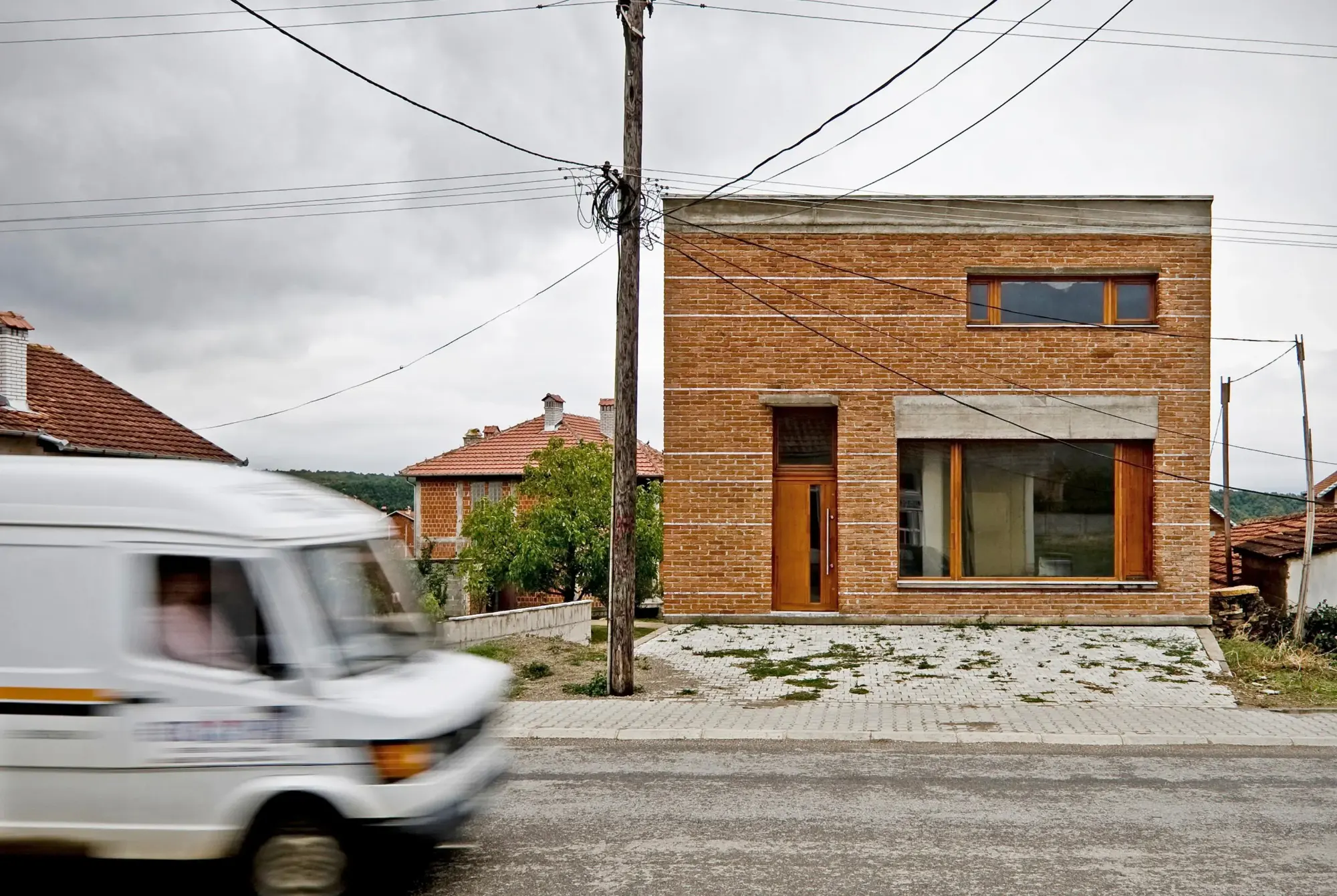
The Elshani House is located in Suhareka, along the northern road leading to the village of Reçan. The road is a typical informal sequence of mostly post-1999 constructions. These buildings often appear unfinished, as many remain unplastered and are predominantly built with red clay blocks. This condition is not exceptional; it characterizes approximately 90% of the informal urban and rural landscape of Kosovo.
Architecture
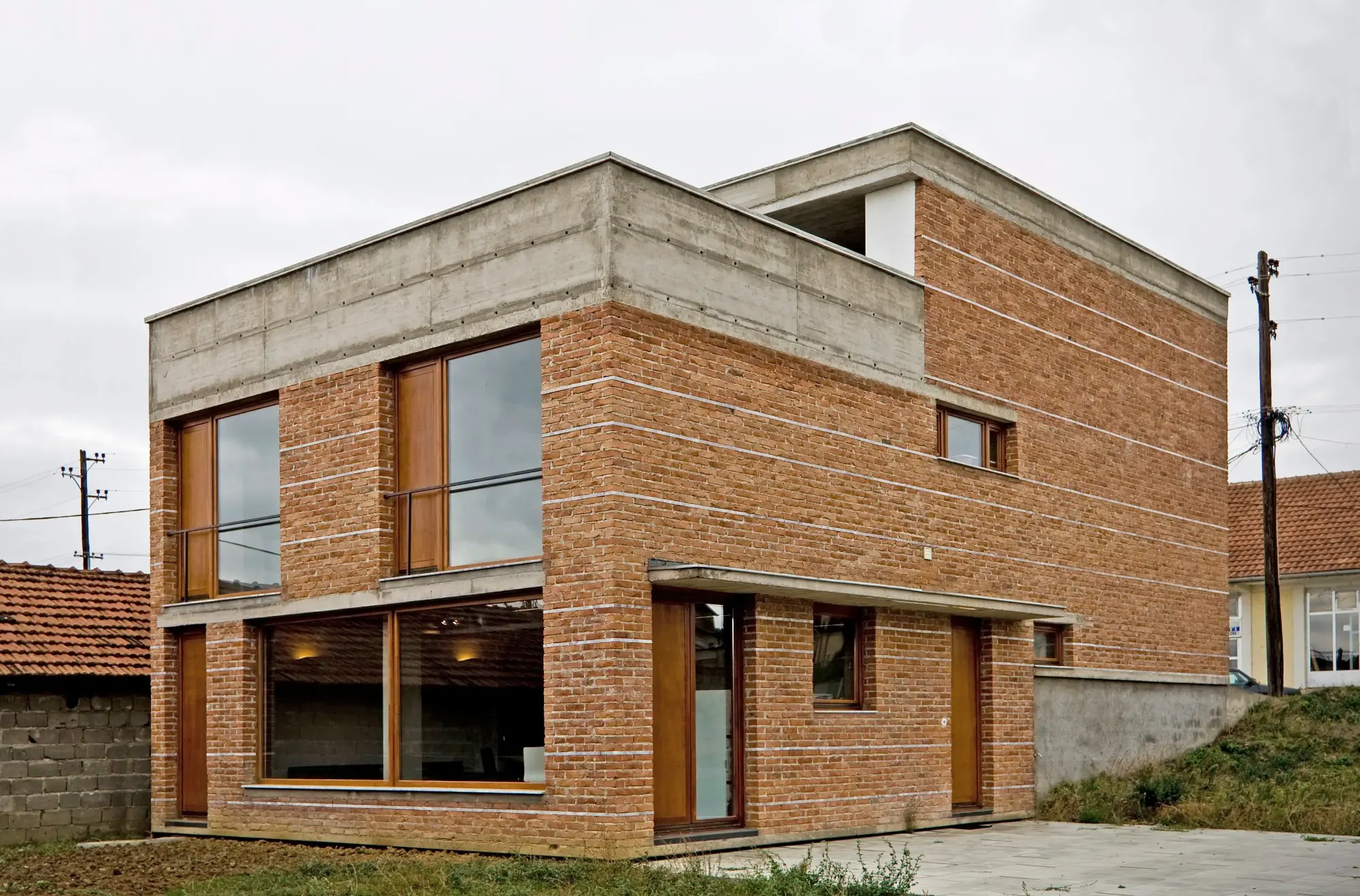
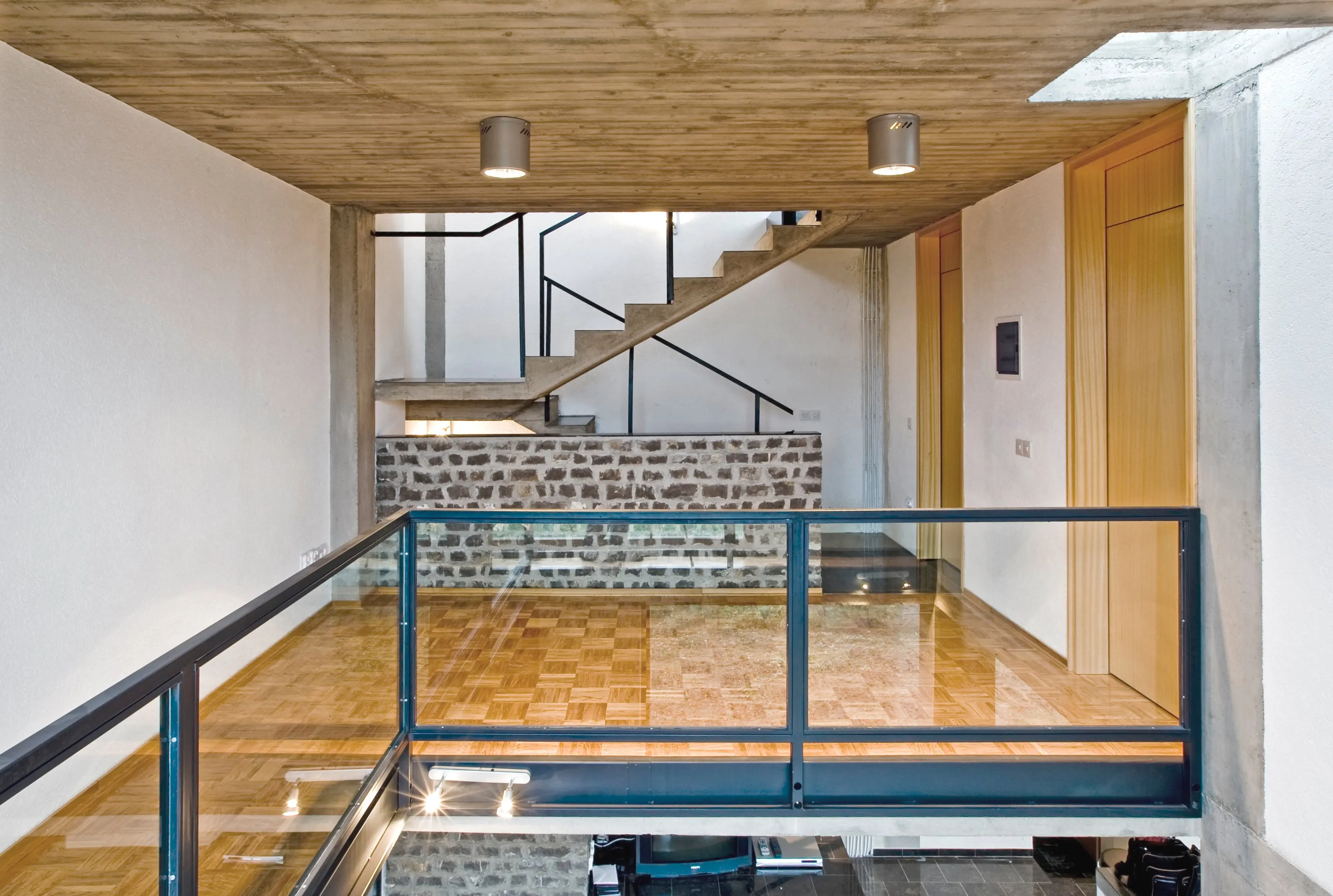
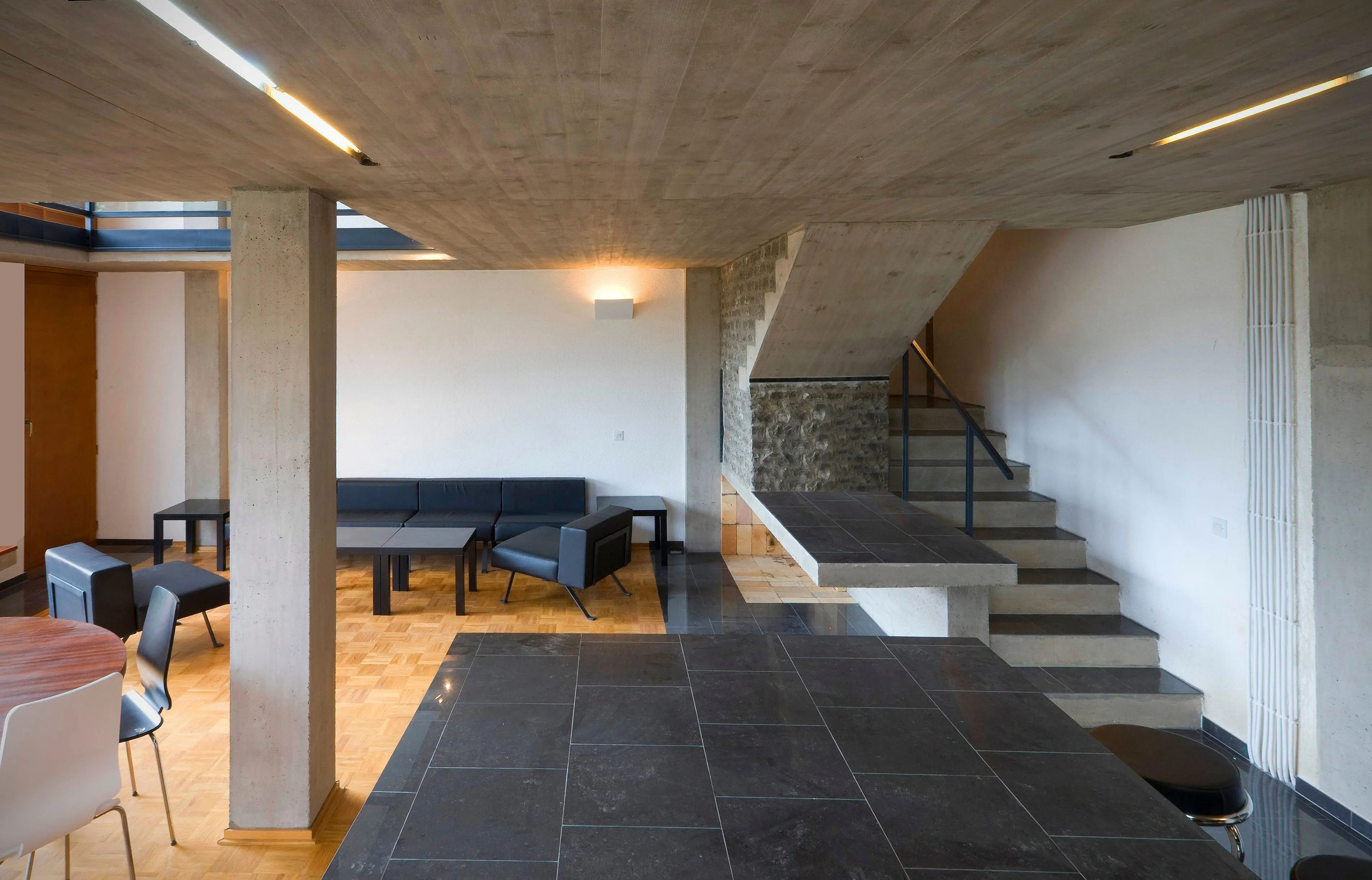
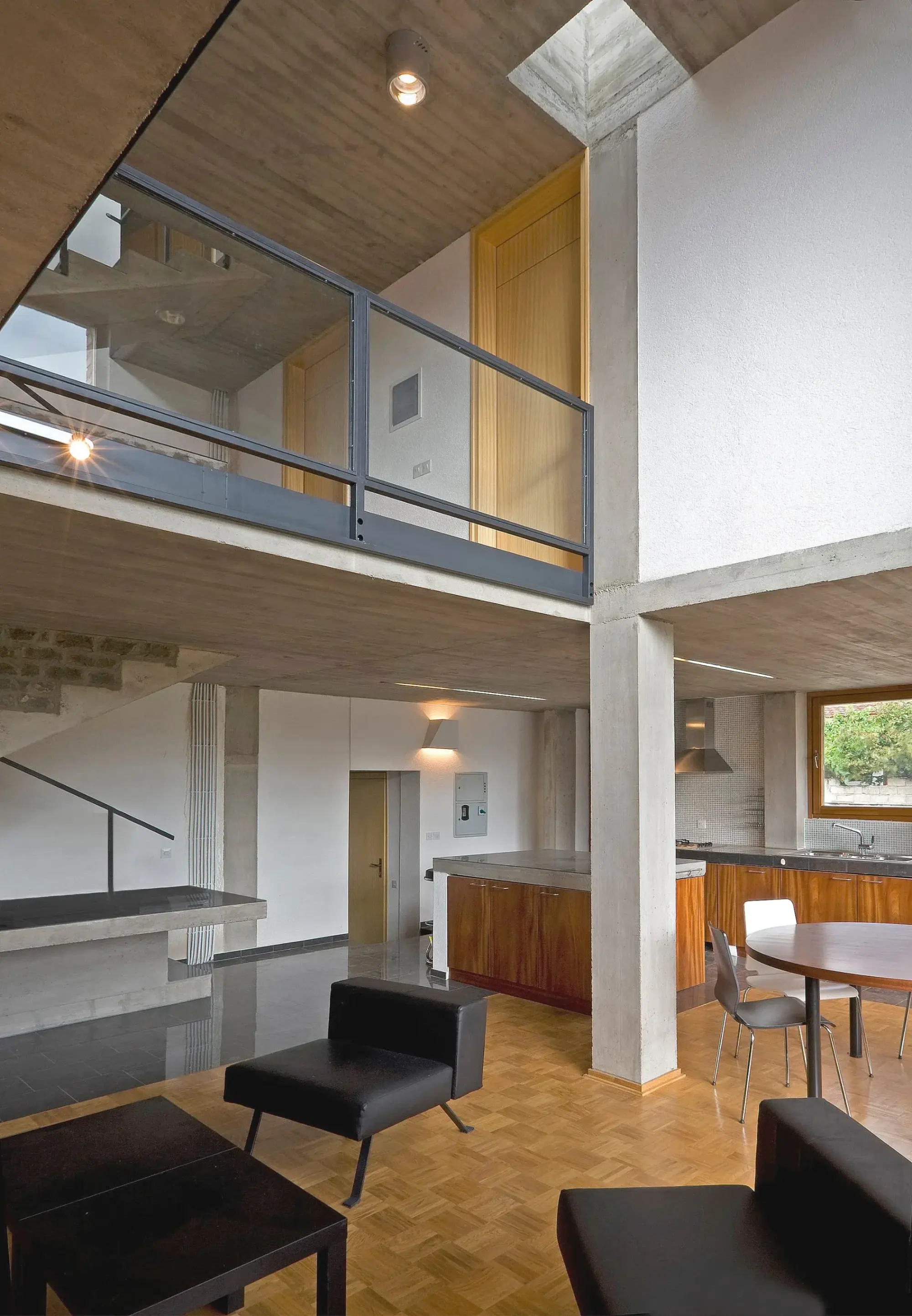
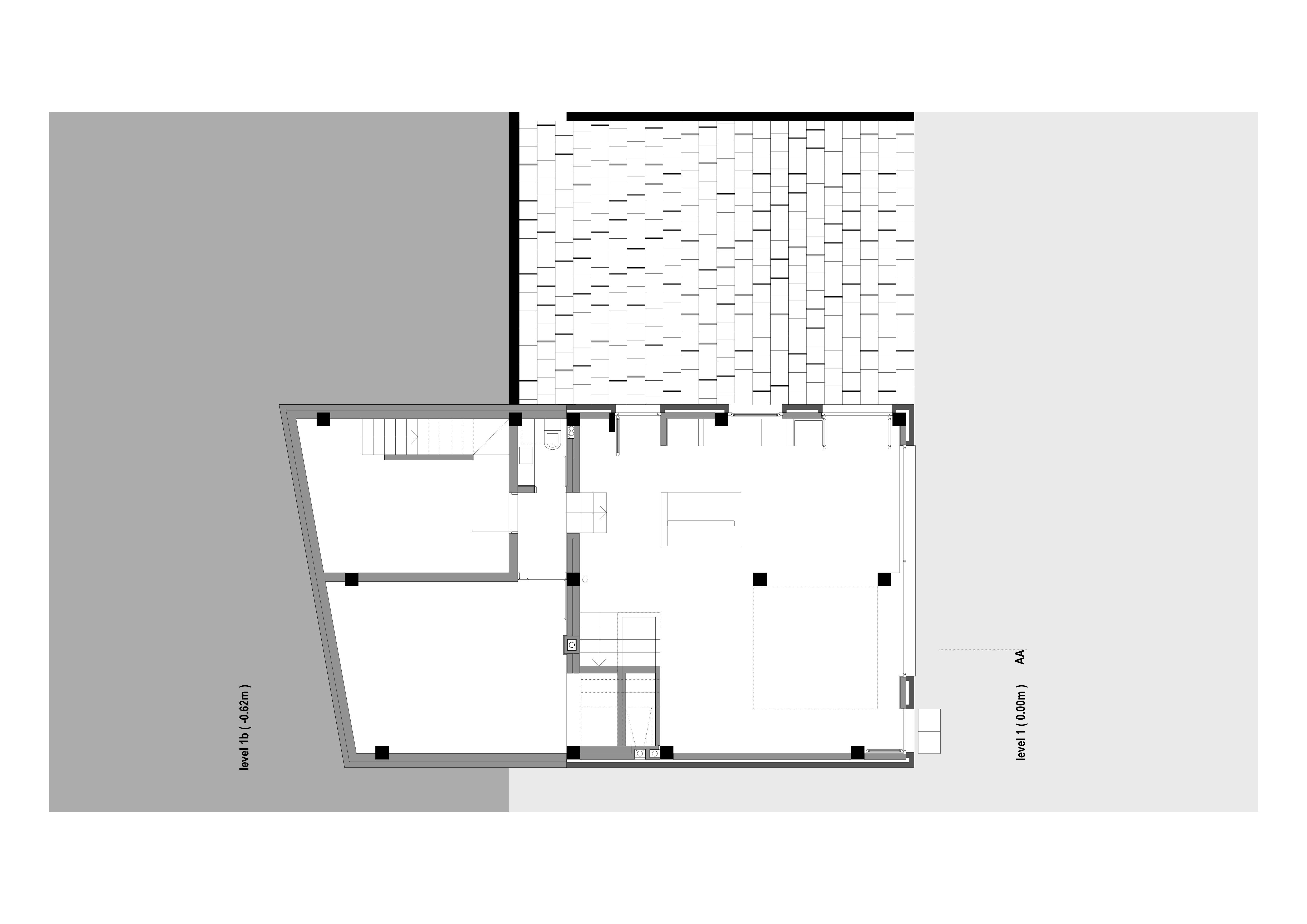
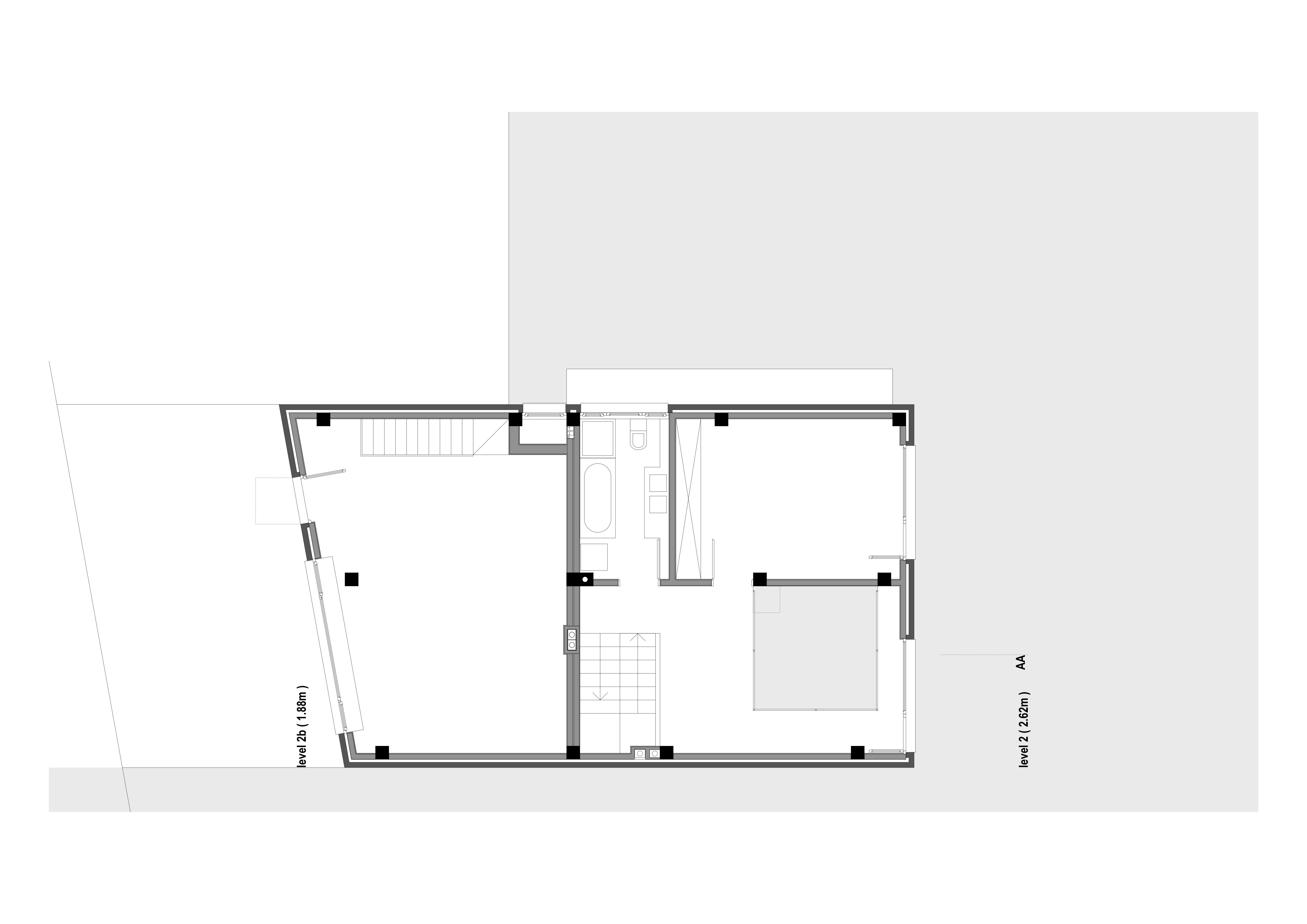
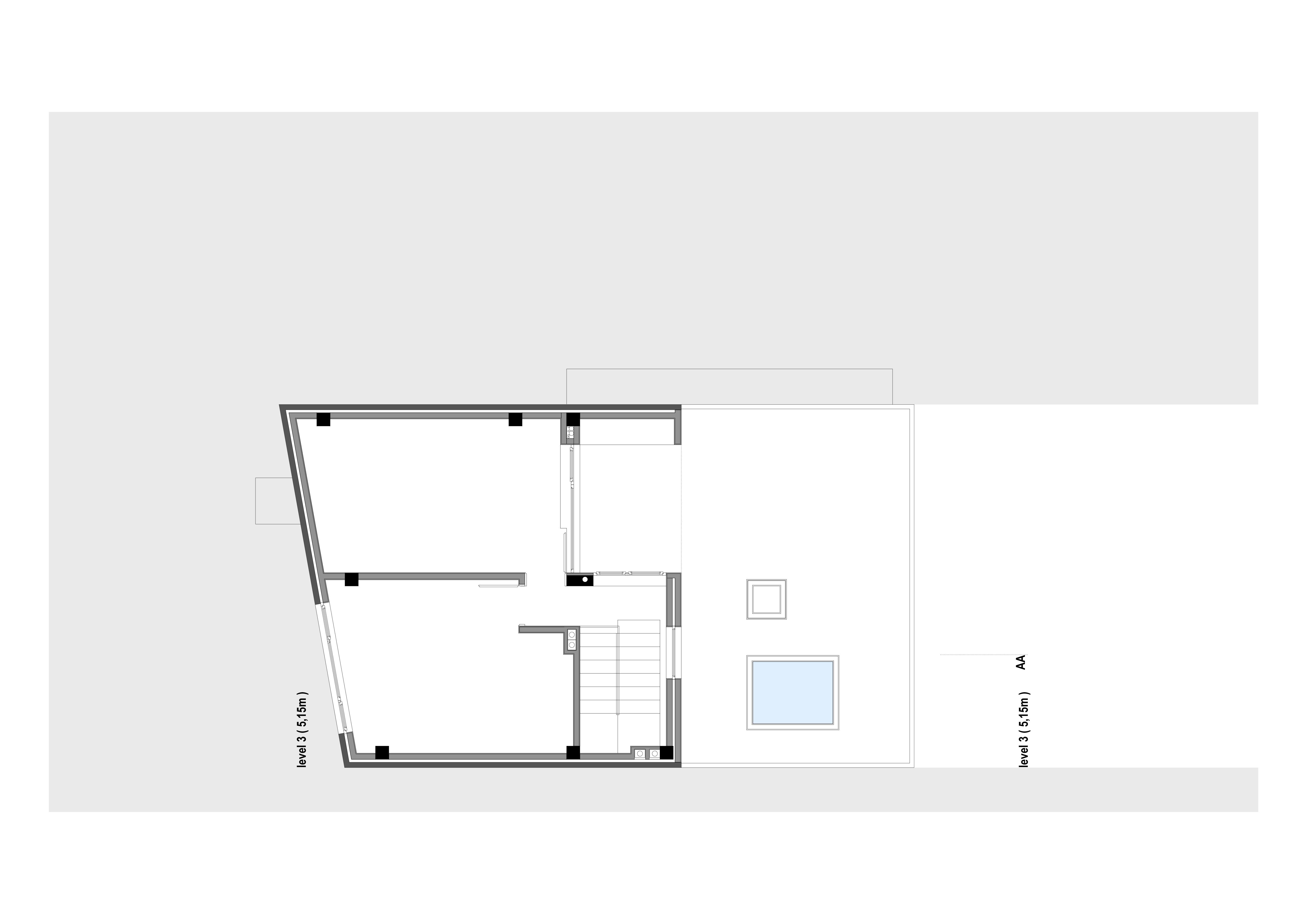
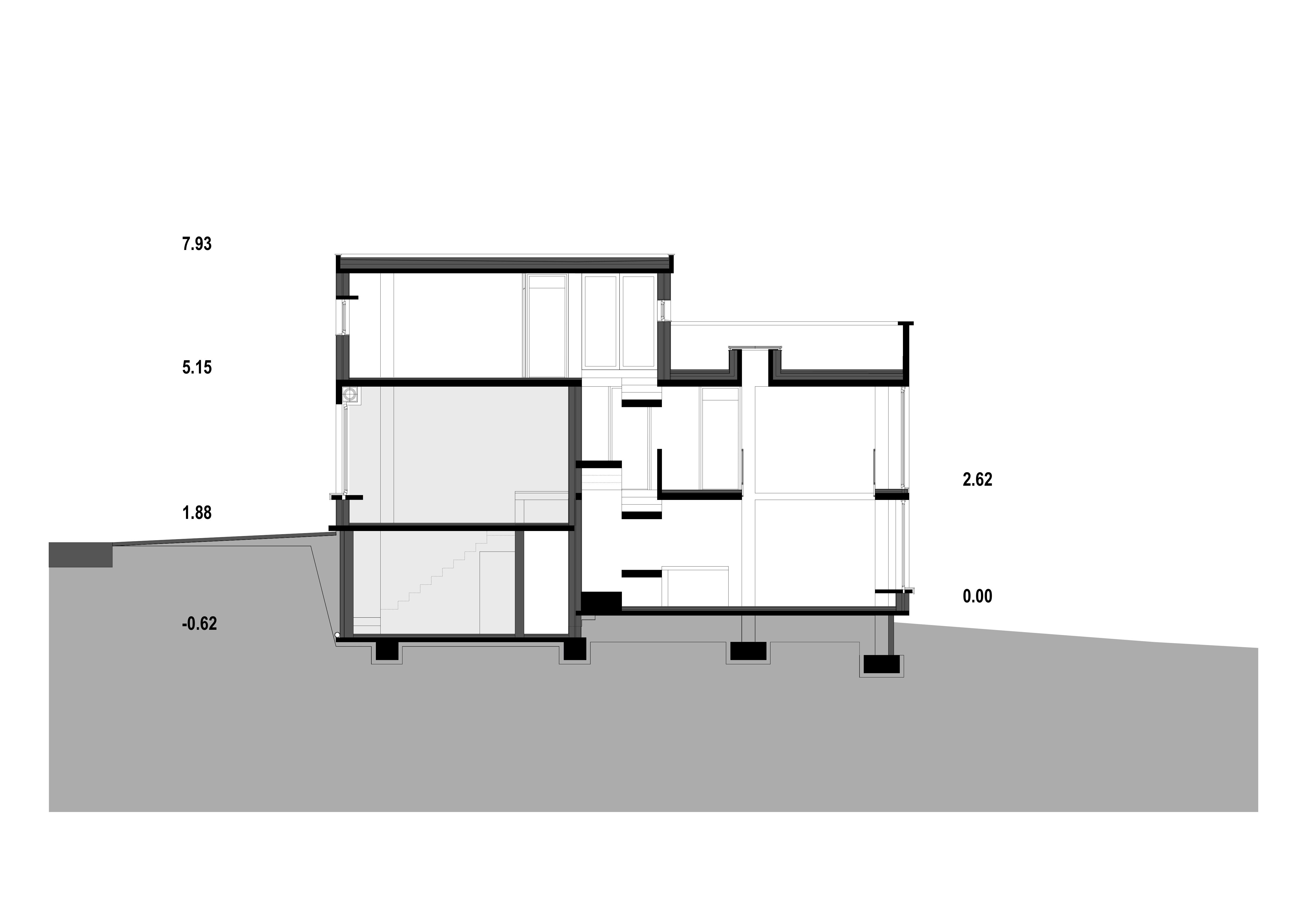
The Elshani House engages its informal context through a red brick façade that appears ordinary at first glance. This familiarity is deliberate but deceptive. Horizontal white marble stripes articulate the façade, revealing it as a permanent architectural construction rather than an unfinished surface. These lines mark the joints of a secondary brick envelope placed in front of the structural wall, concealing the metal connectors and expressing constructional truth.A flat roof and plain wooden windows reinforce the building’s restrained character. From the street, only two levels are visible, while access occurs from the southern courtyard; the street entrance serves an independent atelier. Inside, a modest exterior gives way to a spatially rich interior organized around a double-height living space. Concrete structure, lime-plastered walls, and south-oriented openings create spatial continuity, controlled light, and a clear architectural promenade, in deliberate contrast to the simplicity of the exterior.
Sustainability
The Elshani House was built with a very limited budget. Although the material effort is not immediately visible, the project integrates numerous economical solutions based on spatial efficiency and energy performance. Openings are oriented toward the south, insulation levels are optimized, and floor heights follow Le Corbusier’s Modulor, at 2.26 meters.A key thermal feature is located beneath the living and kitchen areas: a one-meter-deep gravel mass, insulated on its sides. This thermal mass absorbs heat from the low winter sun and releases it gradually, while in summer it contributes to cooling the house. Lighting elements, as well as most of the furniture, were designed specifically for the project by the architect.